

SEO Audit: How to Perform a Complete Website Audit
Why Every Website Needs Regular SEO Audits
Every website develops SEO problems over time.
Some are obvious, such as broken pages or missing title tags. Others are far less visible. Pages stop being indexed, internal links lose their value, outdated content slips down the rankings, and technical issues quietly limit organic growth without triggering any obvious warning signs.
Publishing more content rarely fixes these problems. In many cases, it only adds to them.
An SEO audit gives you a clear picture of what is happening beneath the surface. Instead of guessing why rankings have stalled or traffic has declined, you examine the evidence. Search performance, crawlability, content quality, internal linking, backlinks, page experience, and technical health are all reviewed as part of a structured process designed to uncover the issues that matter most.
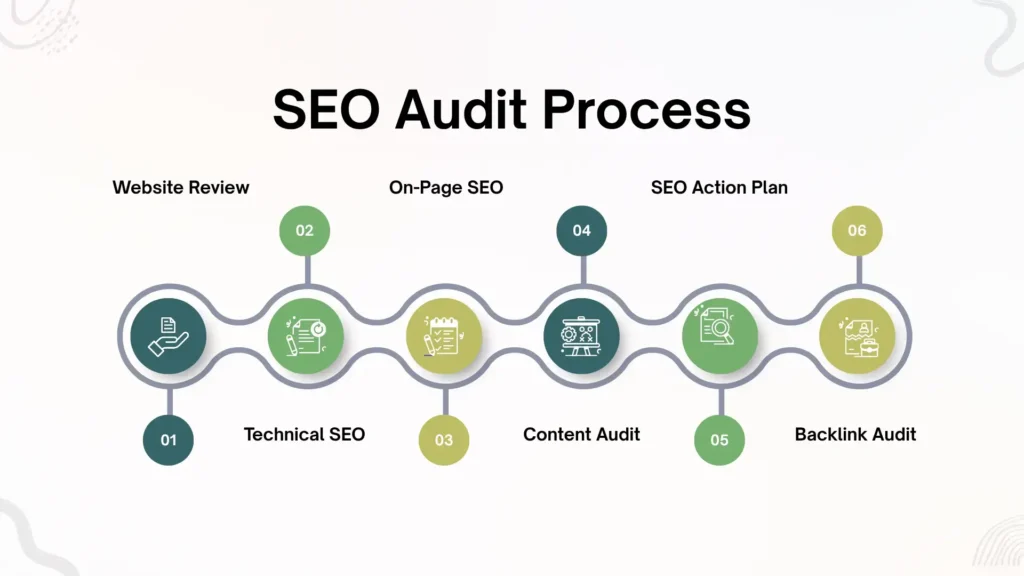
That process is valuable whether you manage a personal website, an online store, a SaaS business, or a portfolio of client projects. Regular audits help you spot problems early, protect existing rankings, and uncover opportunities that would otherwise remain hidden.
This guide explains the complete SEO audit process from start to finish. You’ll learn what to review, which tools to use, how to prioritise your findings, and how to turn those findings into practical improvements that support long-term organic growth.
What Is an SEO Audit?
Definition
An SEO audit is a structured review of every factor that influences a website’s visibility in search engines. Rather than focusing on a single issue, it examines how technical performance, content quality, on-page optimisation, internal linking, backlinks, and user experience work together to support—or limit—organic growth.
Think of it as a health check for your website. Just as a medical examination looks beyond visible symptoms to identify underlying conditions, an SEO audit uncovers the issues that quietly affect rankings long before they become obvious in your traffic reports.
The objective is not to produce a long list of errors. A professional audit identifies the problems that have the greatest impact on search performance, explains why they matter, and prioritises the actions most likely to improve visibility.
When performed regularly, an SEO audit becomes more than a troubleshooting exercise. It provides a framework for making informed decisions, measuring progress, and maintaining a website that continues to meet both user expectations and search engine quality standards.
Types of SEO Audits
Not every SEO audit has the same purpose.
A newly launched website may require a technical audit to ensure search engines can crawl and index every important page. An established website that has lost traffic, however, often needs a broader review covering content quality, backlinks, search intent, and competitive performance.
For that reason, SEO audits are usually divided into several specialist areas. Technical audits focus on crawling, indexing, site architecture, structured data, and page performance. On-page audits evaluate titles, headings, metadata, and content relevance. Content audits identify outdated, duplicate, or underperforming pages, while backlink audits assess the authority and quality of inbound links.
Depending on your business, you may also perform local SEO audits, eCommerce SEO audits, or enterprise-level audits designed for large websites with thousands of indexed pages.
Although each type serves a different purpose, the strongest SEO strategies combine them into a single review that evaluates the website as a whole rather than treating each issue in isolation.
What an SEO Audit Covers
A comprehensive SEO audit extends far beyond technical checks.
It examines how search engines discover your pages, how users interact with your content, and whether every part of your website supports your overall search strategy. That includes technical SEO, on-page optimisation, content quality, internal linking, backlink health, page experience, structured data, mobile usability, and keyword alignment.
It also considers broader performance signals. Are your highest-value pages being indexed? Are outdated articles dragging down topical authority? Is your internal linking helping search engines understand your site architecture? Are competitors outperforming you because they cover search intent more effectively?
Answering those questions turns an SEO audit into a strategic planning exercise rather than a simple diagnostic report.
By the end of the process, you should have a clear understanding of what is working, what is holding your website back, and which improvements deserve immediate attention.
Why SEO Audits Matter
Improve Rankings
Search rankings rarely decline without a reason. Pages lose visibility because something has changed—your competitors have published stronger content, search intent has evolved, technical issues have appeared, or Google’s crawlers are no longer interpreting your website as effectively as before.
An SEO audit helps you identify those changes before they become long-term problems. Instead of making random adjustments, you work with evidence. The audit reveals which pages are losing momentum, why they are underperforming, and which improvements are most likely to restore their visibility.
More importantly, it prevents wasted effort. Updating the wrong pages or chasing low-impact issues consumes time without delivering meaningful results. A structured audit keeps your optimization work focused on the changes that can genuinely influence rankings.
Increase Organic Traffic
Organic traffic grows when search engines can easily understand, trust, and recommend your content.
Even well-written articles can struggle if important pages are not indexed, internal links are weak, duplicate content creates confusion, or technical barriers prevent efficient crawling. These issues often develop gradually, making them difficult to spot without a systematic review.
An SEO audit uncovers those hidden obstacles and highlights opportunities that already exist within your website. In many cases, improving existing pages delivers faster results than publishing new ones because the authority has already been established.
Consistent audits also help you measure progress over time. Instead of relying on traffic alone, you can monitor how individual improvements contribute to stronger visibility across your most valuable pages.
Deliver a Better User Experience
Search engines increasingly reward websites that provide a fast, reliable, and intuitive experience.
Visitors expect pages to load quickly, display correctly on every device, and make information easy to find. When navigation is confusing, pages load slowly, or important content is difficult to access, engagement suffers—and search performance often follows.
An SEO audit evaluates these experience signals alongside traditional optimisation factors. It highlights usability issues that may reduce conversions, increase bounce rates, or prevent visitors from reaching the information they need.
Improving user experience is no longer separate from SEO. The two work together, and successful websites treat them as part of the same optimisation strategy.
Uncover Hidden SEO Problems
Some of the most damaging SEO issues are the ones that remain unnoticed.
A website may appear healthy on the surface while important pages are excluded from the index, redirect chains waste crawl budget, structured data contains errors, or internal links fail to distribute authority effectively. None of these problems are immediately obvious to visitors, yet each can weaken organic performance over time.
Regular SEO audits bring those issues to light before they affect a larger portion of your website. They also establish a repeatable process for monitoring changes, validating fixes, and maintaining long-term search visibility.
Rather than reacting after rankings decline, you identify risks early and address them before they become expensive problems to solve.
When Should You Perform an SEO Audit?
When Launching a New Website
An SEO audit should begin before a new website goes live, not after it starts losing visibility. Launching a site without checking its technical foundation often leads to avoidable problems, such as blocked pages, broken internal links, incorrect redirects, or missing metadata.
A pre-launch audit ensures that search engines can crawl and index the right pages from day one. It also confirms that your site structure, XML sitemap, robots.txt file, canonical tags, and Core Web Vitals are ready before Google discovers your content.
Starting with a clean foundation is far easier than fixing technical issues after they have already affected your rankings.
After a Significant Drop in Organic Traffic
A sudden decline in traffic is one of the clearest signals that your website needs an SEO audit.
Traffic losses can happen for many reasons. Google may have released a core update, competitors may have published stronger content, or technical issues may be preventing important pages from performing as expected. In some cases, the problem is much simpler, such as accidentally adding a noindex tag or removing critical internal links during a website update.
Instead of making random changes, an SEO audit helps identify the root cause. Reviewing your data systematically allows you to separate temporary fluctuations from genuine SEO problems and focus your efforts where they will have the greatest impact.
Before a Website Migration or Redesign
Website migrations are among the highest-risk projects in SEO.
Changing your domain, redesigning your website, switching CMS platforms, or restructuring URLs can significantly affect rankings if the migration is not carefully planned. Missing redirects, broken links, duplicate pages, or indexing errors can quickly reduce organic visibility.
Running an SEO audit before migration establishes a performance benchmark. It documents your current rankings, indexed pages, traffic, and technical health, making it much easier to identify problems after the new website goes live.
A second audit immediately after the migration confirms that search engines are crawling and indexing the updated website correctly.
As Part of a Quarterly SEO Review
SEO is not a one-time project. Search algorithms evolve, competitors improve their content, and websites naturally change as new pages are published and older content becomes outdated.
Conducting a quarterly SEO audit allows you to monitor these changes before they become larger issues. It provides an opportunity to review technical health, refresh important content, strengthen internal linking, and identify pages that have started losing visibility.
For most websites, a quarterly review provides the right balance between ongoing maintenance and practical workload.
During Your Annual SEO Strategy Review
An annual SEO audit takes a broader view of your website’s overall performance.
Rather than focusing on individual issues, it evaluates long-term trends. This includes analysing organic growth, content performance, backlink quality, topical authority, keyword coverage, and the effectiveness of your overall SEO strategy.
It is also the ideal time to retire outdated content, identify new topic opportunities, review competitor performance, and update your roadmap for the year ahead.
Treating an annual audit as part of your strategic planning process ensures that your SEO efforts continue to support your wider business objectives rather than simply reacting to short-term ranking changes.
SEO Audit Checklist Before You Start
A successful SEO audit begins long before the first issue is identified.
Many website owners jump straight into an audit tool, generate hundreds of warnings, and start fixing problems without understanding which ones actually matter. The result is often a long list of completed tasks with very little improvement in rankings or organic traffic.
Preparation prevents that from happening.
Before reviewing a single page, gather the data, tools, and access you need. This allows you to verify issues from multiple sources instead of relying on a single platform, while also giving you the context needed to prioritise your findings.
Access You Should Have Before Starting
An SEO audit is only as accurate as the data behind it. Before you begin, make sure you have access to every platform that provides information about your website’s performance.
At a minimum, you should have access to:
- Google Search Console
- Google Analytics 4
- Your website’s CMS
- An SEO platform such as Semrush or Ahrefs
- A website crawler like Screaming Frog
If you work with client websites, confirm that you also have permission to view DNS settings, server configurations, and any CDN or hosting dashboards. These are not always required, but they become invaluable when technical issues need further investigation.
Google Search Console
Google Search Console should be the first place you check before running any SEO audit.
Unlike third-party tools, the data comes directly from Google. It shows which pages are indexed, which queries generate impressions, where rankings have started to decline, and whether Google has detected crawling, indexing, or usability issues.
It is also the quickest way to identify opportunities. Pages ranking just outside the first page of search results, indexing exclusions, declining click-through rates, and Core Web Vitals reports often reveal the highest-impact improvements before you even open another tool.
Throughout this guide, Google Search Console will serve as the primary source for validating audit findings rather than relying solely on crawler reports.
Google Analytics 4
While Search Console explains how users find your website, Google Analytics 4 explains what happens after they arrive.
Review your highest-performing landing pages, engagement metrics, conversions, and traffic trends before making any recommendations. A page with declining rankings but strong conversion rates may deserve a higher priority than one with more traffic but little business value.
Looking at SEO data without user behaviour often leads to poor decisions. Combining both datasets gives you a much clearer understanding of which pages genuinely deserve attention.
Semrush or Ahrefs
Professional SEO platforms provide the deeper analysis that Search Console cannot.
Use them to identify keyword gaps, backlink opportunities, competitor performance, historical ranking changes, and technical issues across your entire website. These platforms are particularly valuable when comparing your site against competitors, monitoring keyword visibility, or identifying pages that have gradually lost authority over time.
The purpose is not to replace Google’s own data, but to enrich it with additional insights that support better decision-making.
Screaming Frog SEO Spider
Every comprehensive SEO audit should include a full website crawl.
Screaming Frog allows you to analyse your website in the same structured way that search engines discover pages. It quickly highlights broken links, redirect chains, duplicate titles, missing metadata, orphaned pages, canonical issues, and many other technical problems that are difficult to identify manually.
For medium and large websites, this type of crawl often reveals issues that remain hidden in browser-based reviews.
Create a Baseline Before Making Changes
One mistake appears in almost every failed SEO audit.
Changes are made before the original performance has been recorded.
Before fixing anything, document your current rankings, indexed pages, organic traffic, Core Web Vitals, conversions, and backlink profile. These benchmarks allow you to measure the true impact of every optimization you implement.
Without a baseline, it becomes almost impossible to determine whether your SEO efforts actually improved performance or whether rankings changed for unrelated reasons.
A professional SEO audit does not simply identify problems. It creates a measurable starting point for continuous improvement.
Technical SEO Audit
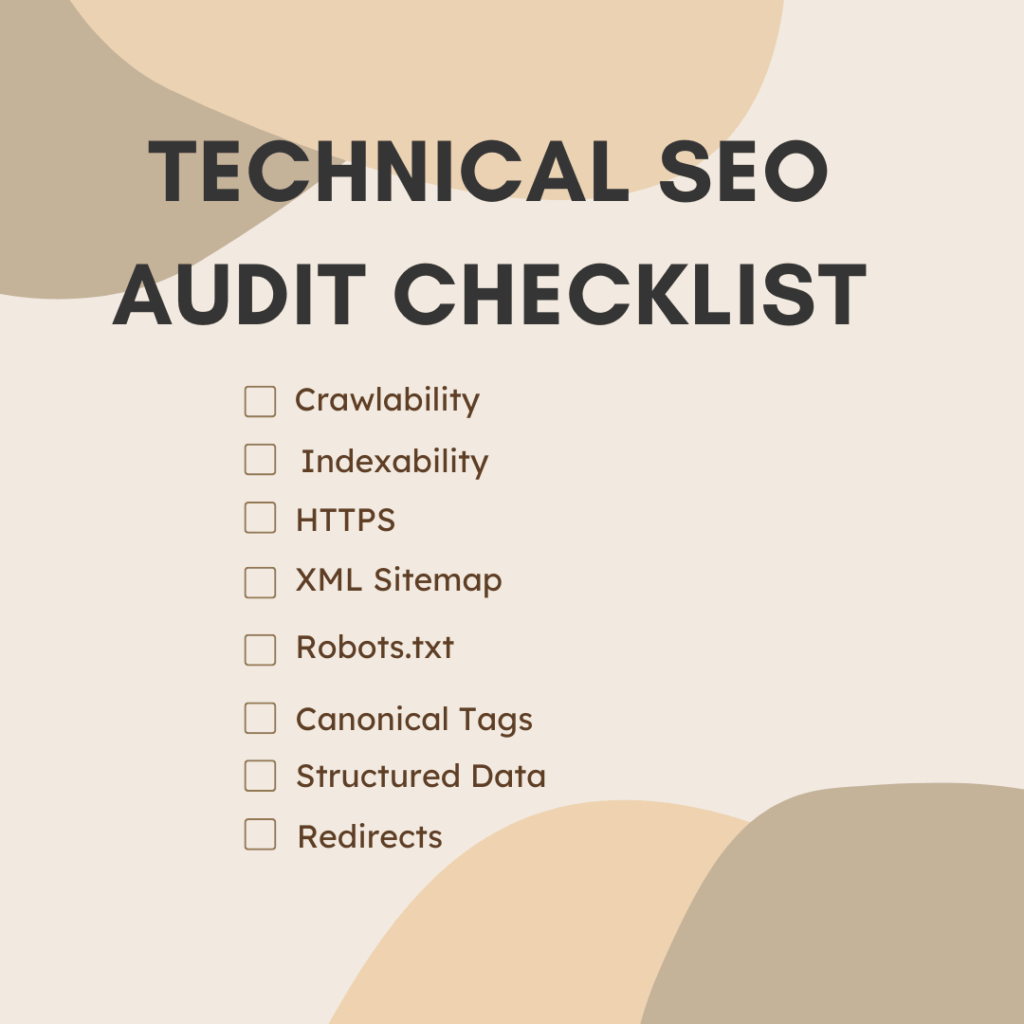
Technical SEO forms the foundation of every successful website. Even the most valuable content will struggle to perform if search engines cannot crawl, understand, or index it correctly.
A technical SEO audit focuses on the infrastructure behind your website rather than the content itself. Its purpose is to identify barriers that prevent search engines from accessing your pages efficiently or interpreting them as intended.
Rather than chasing every warning produced by an SEO tool, focus on issues that have a measurable impact on crawlability, indexability, page experience, and overall search visibility.
Evaluate Crawlability
Search engines must be able to discover your pages before they can rank them.
Start by checking whether important sections of your website are accessible to search engine crawlers. Pages blocked by robots.txt, broken internal links, excessive redirect chains, or poor site architecture can all reduce crawl efficiency.
A website with strong crawlability allows search engines to navigate its pages naturally, ensuring that new and updated content is discovered as quickly as possible.
If your crawl reports reveal blocked resources or inaccessible pages, investigate the underlying cause before moving on to other optimisation tasks.
Review Indexability
Not every crawled page becomes part of Google’s index.
Use Google Search Console to identify pages that have been excluded from indexing and determine why. Some exclusions are intentional, while others may indicate technical problems that prevent valuable pages from appearing in search results.
Pay close attention to:
- Pages marked as “Crawled – currently not indexed”
- Pages marked as “Discovered – currently not indexed”
- Duplicate pages with incorrect canonical signals
- Unexpected noindex directives
These reports often reveal opportunities to recover existing content instead of creating new pages.
Google’s Page Indexing report documentation explains what each indexing status means and when action is required.
Confirm HTTPS Security
HTTPS has long been a standard expectation for modern websites.
During your audit, confirm that every page loads securely, redirects consistently to the preferred HTTPS version, and does not generate mixed-content warnings caused by unsecured resources.
Security issues rarely affect a single page. They often indicate broader configuration problems that should be resolved before other optimization work begins.
Review Your XML Sitemap
Your XML sitemap acts as a roadmap for search engines by highlighting the pages you want them to discover and index.
Check that the sitemap is accessible, contains only canonical URLs, excludes unnecessary pages, and updates automatically as new content is published.
A detailed explanation of sitemap optimisation is available in our Technical SEO Checklist, where the topic is covered step by step.
Inspect Your Robots.txt File
The robots.txt file controls how search engine crawlers interact with different sections of your website.
Review it carefully to ensure that important content is not being blocked accidentally. A single misplaced directive can prevent search engines from accessing entire sections of your site.
For a complete breakdown of robots.txt best practices, refer to our dedicated Technical SEO Checklist.
You can also refer to Google’s official robots.txt documentation for implementation guidance and testing recommendations.
Validate Canonical Tags
Canonical tags help search engines understand which version of a page should be treated as the primary source when duplicate or highly similar content exists.
Incorrect canonical implementation can dilute ranking signals, confuse search engines, and reduce the visibility of important pages.
During your audit, verify that canonical tags point to the correct URLs and remain consistent across your website.
A more detailed implementation guide is included in our Technical SEO Checklist.
Check Structured Data
Structured data provides additional context about your content and helps search engines interpret pages more accurately.
Validate your schema markup to ensure it is free from errors, matches the visible content on the page, and supports relevant rich results where appropriate.
Rather than adding schema everywhere, focus on implementing the most suitable markup for each page type.
Our Technical SEO Checklist covers schema implementation in greater detail.
After implementation, validate your structured data using Google’s Rich Results Test to confirm that eligible pages can generate supported search features.
Audit Redirects
Redirects play an important role in preserving link equity and maintaining a smooth user experience.
Look for redirect chains, redirect loops, and outdated redirects that may slow crawling or create unnecessary complexity. Every permanent redirect should lead directly to its final destination without passing through multiple intermediate URLs.
If your website has undergone redesigns or URL changes, this step deserves particular attention.
A complete redirect optimization workflow is available in our Technical SEO Checklist.
On-Page SEO Audit
Technical health determines whether search engines can access your website, but on-page SEO determines whether each page deserves to rank.
An effective on-page SEO audit examines how individual pages communicate their purpose to both users and search engines. Every element—from the page title to internal links—should work together to reinforce the primary topic and satisfy search intent.
The goal is not to optimize every page identically. It is to ensure that every important page is relevant, well-structured, and capable of competing in search results.
Review Title Tags
Your title tag is often the first thing users see in search results. It influences click-through rates while helping search engines understand the page’s primary topic.
During your audit, check whether each title is unique, accurately reflects the page content, and naturally includes the primary keyword without sounding forced. Titles should remain concise, descriptive, and compelling enough to encourage clicks.
If multiple pages target similar keywords with nearly identical titles, they may begin competing against one another, making it harder for either page to perform well.
Evaluate Meta Descriptions
Although meta descriptions are not a direct ranking factor, they play an important role in attracting clicks from search results.
Review each description to ensure it summarises the page accurately, highlights its value, and encourages users to visit your website. Avoid duplicate descriptions or automatically generated text that adds little context.
A well-written meta description sets clear expectations before a visitor even reaches your page.
Audit Heading Structure
Headings create a logical hierarchy that makes content easier to read and easier for search engines to interpret.
Every page should have a single H1 that clearly defines the topic, followed by H2 and H3 headings that organise supporting information into meaningful sections. A consistent heading structure improves readability and helps readers scan long-form content more efficiently.
If headings appear out of sequence or are used purely for styling, they should be corrected as part of the audit.
Check URL Structure
URLs should be simple, descriptive, and easy to understand.
Long or cluttered URLs filled with unnecessary parameters make pages harder to interpret and less appealing when shared. Wherever possible, use short, readable URLs that reflect the page topic without unnecessary words.
Changing established URLs should only be considered when there is a clear SEO benefit and appropriate redirects are already planned.
Review Image Optimisation
Images contribute to both user experience and search visibility, yet they are often overlooked during SEO audits.
Review whether images are appropriately compressed, load efficiently, include descriptive filenames, and use meaningful alternative text. Oversized images can slow page loading, while generic filenames provide little context for search engines.
Every image should support the content rather than simply fill empty space.
Evaluate Alternative Text
Alternative text exists primarily to improve accessibility, but it also provides additional context about an image.
Rather than inserting keywords unnaturally, describe what the image actually shows in clear, natural language. Accurate alternative text improves accessibility for screen readers while helping search engines understand visual content.
If an image adds no informational value, simple or empty alternative text may be more appropriate than unnecessary keyword stuffing.
Assess EEAT Signals
Search engines increasingly evaluate content through the lens of Experience, Expertise, Authoritativeness, and Trustworthiness.
During your audit, consider whether each page demonstrates genuine expertise, provides accurate information, references reliable sources where appropriate, and gives visitors confidence in the content they are reading.
Clear author information, transparent business details, original insights, and regularly updated content all contribute to stronger trust signals over time.
Review Entity Optimisation
Modern search engines rely on entities—not just keywords—to understand content.
Review whether your pages clearly reference the people, products, organisations, tools, and concepts that define the topic. Strong entity optimization helps search engines understand context and strengthens topical relevance without relying on excessive keyword repetition.
Instead of forcing keywords into every paragraph, focus on covering the subject comprehensively using the terminology your audience naturally expects to see.
Content Audit
Publishing content consistently is important, but publishing without reviewing existing content eventually creates more problems than it solves. Pages become outdated, multiple articles begin targeting the same search intent, and valuable content slowly loses visibility as competitors publish more comprehensive resources.
A content audit helps you understand how every page contributes to your website’s overall performance. Instead of measuring success by the number of published articles, you evaluate whether each page still deserves its place in your content strategy.
The objective is not to delete content. It is to improve, consolidate, update, or remove pages based on evidence rather than assumptions.
Identify Thin Content
Not every indexed page provides enough value to compete in search results.
Thin content often consists of pages with limited information, weak topical coverage, or little originality. Some pages may have been created years ago, while others were published simply to target a keyword without fully answering the user’s question.
During your audit, review whether every page provides meaningful information that satisfies search intent. If a page offers little value, decide whether it should be expanded, merged with a stronger article, or removed entirely.
Quality almost always outperforms quantity over the long term.
Find Duplicate Content
Duplicate content does not always result in a penalty, but it can make it difficult for search engines to determine which version of a page should rank.
In many cases, duplication happens unintentionally. Similar service pages, repeated product descriptions, printer-friendly URLs, or multiple articles covering the same topic can all divide ranking signals.
When reviewing your website, look for pages with overlapping topics, repeated copy, or nearly identical search intent. Where appropriate, consolidate similar pages into a single, stronger resource instead of allowing them to compete with one another.
Review Content Decay
Even high-performing content loses momentum over time.
Statistics become outdated, screenshots no longer match current interfaces, recommendations become less relevant, and competitors publish more comprehensive resources. Gradually, rankings begin to decline even though the page once performed well.
Content decay is often easier to reverse than creating a completely new article. Updating information, improving structure, adding recent examples, and strengthening topical depth can often restore lost visibility without starting from scratch.
Tracking historical performance in Google Search Console makes these opportunities much easier to identify.
After identifying declining pages, use reliable keyword research tools to discover new search opportunities and expand topical coverage before updating the content.
Evaluate Content Freshness
Fresh content is not about constantly changing publication dates.
It is about ensuring that important pages remain accurate, relevant, and useful. An article that has been updated with new research, current examples, revised recommendations, and improved screenshots is far more valuable than one that simply displays a recent date without meaningful changes.
As part of your audit, review whether your most important pages still reflect current best practices and industry developments. Regular updates help maintain credibility while giving search engines stronger signals that the content remains relevant.
Modern content optimization tools can also help identify missing topics, improve semantic relevance, and strengthen search intent coverage during the refresh process.
Check Search Intent Alignment
One of the most common reasons a page struggles to rank is that it answers the wrong question.
Search intent changes over time. A page that once matched user expectations may no longer satisfy what people are actually searching for today. Competitors may have introduced more practical guides, updated examples, or more comprehensive coverage that better reflects current intent.
During your audit, compare your page with the highest-ranking results for its target keyword. Look beyond word count and focus on purpose. Is the content informational when users expect a tutorial? Is it too advanced for beginners, or too basic for experienced readers?
If your content no longer aligns with search intent, rewriting sections or restructuring the page will usually have a greater impact than simply adding more keywords.
Content audits are often overlooked because they require more judgement than technical checks. There is no tool that can accurately decide whether a page genuinely serves its audience. That decision depends on careful analysis, real user behaviour, and a clear understanding of what people expect when they perform a search.
For many websites, improving existing content delivers stronger long-term results than publishing another article on a topic that has already been covered.
Competitor & Content Gap Analysis
Ranking well in search results is not only about improving your own website. It also requires understanding why competing pages consistently outperform yours.
A competitor analysis reveals the strengths of the websites already ranking for your target keywords, while a content gap analysis highlights the topics, questions, and search intent your content has not fully addressed.
Instead of copying competitors, the objective is to identify opportunities they have missed and produce content that offers greater value.
Identify Keyword Gaps
Every competitor ranks for keywords that your website does not.
Some of these keywords represent entirely new content opportunities, while others reveal gaps within existing articles. Analysing these differences helps you understand where your content falls short and which topics deserve additional attention.
Rather than chasing every keyword your competitors rank for, focus on terms that align with your website’s expertise, business goals, and topical authority. Expanding into relevant keyword clusters is usually more effective than targeting isolated search terms with little strategic value.
Keyword gap analysis should support your overall content strategy—not replace it.
Discover Content Gaps
Keyword data explains where competitors receive traffic, but it does not explain why.
A content gap analysis looks beyond rankings to evaluate the depth, quality, and usefulness of competing pages. Ask yourself what they cover that your article does not. Are they answering additional questions? Including original examples? Explaining complex concepts more clearly? Providing better visuals or practical workflows?
The objective is not to make your article longer. It is to make it more complete, more useful, and more relevant to the reader.
Sometimes a single missing section is enough to prevent a page from competing effectively against stronger resources.
Study the Search Results
Search results reveal far more than rankings.
Review the first page for your target keyword and pay attention to the type of content Google is rewarding. Are the top results detailed guides, comparison articles, tutorials, or product pages? Do they include videos, tables, FAQs, or featured snippets? Has Google introduced AI Overviews for the query?
These patterns provide valuable clues about user expectations. If every high-ranking result follows a similar format, there is usually a reason. Understanding that pattern allows you to satisfy search intent while still creating content that stands apart through better structure, clearer explanations, or stronger evidence.
The search results themselves are often the most reliable source of content planning.
Analyse Featured Snippets
A featured snippet represents one of the most visible positions in Google’s search results.
When a keyword triggers a snippet, examine how the existing result presents its information. Many snippets answer a question directly, provide a short definition, list a series of steps, or summarise a process in a concise table.
Rather than forcing every section into a snippet format, identify the questions that genuinely deserve direct answers. Well-structured definitions, numbered processes, comparison tables, and concise summaries naturally improve your chances of earning featured snippets without disrupting the overall reading experience.
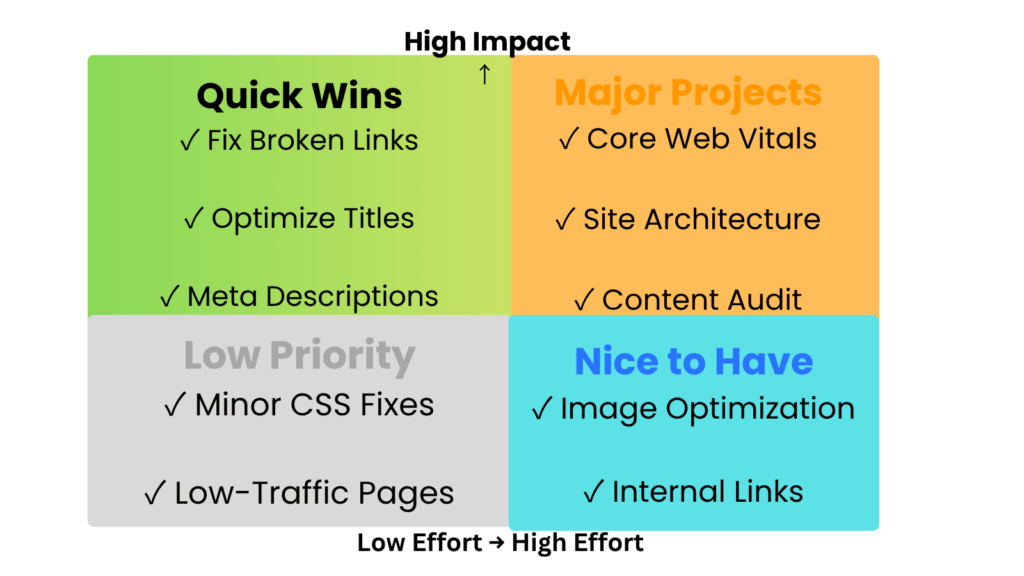
Not every SEO issue should be fixed immediately. Prioritizing improvements based on their impact and implementation effort helps you achieve faster results while planning larger optimization projects more effectively.
Review AI Overviews
AI-generated search experiences are changing how users discover information.
For many informational searches, Google now presents AI-generated summaries before the traditional organic results. These summaries typically draw information from pages that demonstrate topical depth, clear structure, trustworthy sources, and comprehensive coverage.
During your competitor analysis, review whether your target keyword triggers an AI Overview and examine the types of sources being referenced. This provides useful insight into the level of authority, clarity, and completeness expected for that topic.
Creating content for AI search does not require a separate writing style. It requires accurate information, logical organisation, and enough depth to answer the user’s question confidently.
Competitor analysis should never become an exercise in imitation.
The purpose is to understand the current standard for your topic, identify where competing content falls short, and publish a resource that readers find more useful, more complete, and easier to trust. That is the difference between following competitors and outperforming them.
Internal Linking Audit
Internal links do more than connect one page to another. They help search engines understand your website’s structure, establish relationships between topics, and distribute authority across important pages.
When internal linking is planned carefully, valuable pages receive stronger signals, users discover related content more easily, and search engines can crawl the site more efficiently. Poor internal linking, on the other hand, often leaves important content isolated and difficult to discover.
An internal linking audit focuses on whether your website guides both users and search engines through your content in a logical and meaningful way.
Identify Orphan Pages
An orphan page is a page that exists on your website but has no internal links pointing to it.
Even if it appears in your XML sitemap, a page without internal links is much harder for users and search engines to discover naturally. Over time, orphan pages often receive little traffic, attract few backlinks, and contribute very little to your site’s overall authority.
During your audit, identify pages that have become disconnected from the rest of your website. If the content still provides value, integrate it into your internal linking structure. If it no longer serves a purpose, consider updating, merging, or removing it.
A valuable page should never remain isolated.
Review Anchor Text
Anchor text provides context about the destination page.
Generic phrases such as click here or read more tell search engines very little about the page being linked. Descriptive anchor text, however, helps reinforce topical relevance while giving readers a clearer expectation of what they will find next.
During your audit, review whether important pages receive natural, descriptive anchors from relevant content. Avoid excessive repetition of exact-match keywords, as over-optimised anchor text can appear unnatural and reduce the overall quality of your linking strategy.
The best anchor text reads naturally within the sentence while accurately describing the destination page.
Evaluate Link Depth
Important pages should never require visitors to click through multiple levels of navigation before reaching them.
The deeper a page sits within your website’s structure, the less likely it is to receive consistent attention from both users and search engines. While there is no fixed rule, pages that contribute directly to your business or content strategy should generally be accessible within a few clicks from the homepage.
During your audit, review your site architecture and identify valuable pages that have become buried beneath unnecessary categories or navigation layers. Simplifying access often improves both usability and crawl efficiency.
Review Topic Clusters
Modern SEO is built around topical authority rather than isolated keywords.
Your internal linking strategy should reflect that by connecting related articles into clear topic clusters. Pillar pages should link to supporting articles, while supporting articles should reinforce the pillar through relevant contextual links.
This structure helps search engines understand the relationship between your content while encouraging readers to explore additional resources without leaving your website.
When auditing internal links, look beyond individual pages. Evaluate whether your entire content ecosystem supports a logical topical hierarchy that strengthens authority across the subject as a whole.
A successful internal linking audit is not measured by the number of links on a page. It is measured by how effectively those links guide users, reinforce topical relevance, and distribute authority throughout the website.
When every important page is connected through meaningful contextual links, your entire site becomes easier to crawl, easier to navigate, and better positioned to compete in search results.
Backlink Audit
Backlinks remain one of the strongest signals of authority in search. However, the value of a backlink profile is not determined by the number of links pointing to your website. What matters is their quality, relevance, and the trust they pass to your pages.
A backlink audit helps you understand whether your link profile strengthens your website or quietly limits its ability to compete. It highlights opportunities to build authority while identifying risks that deserve closer attention.
The objective is not to chase more backlinks. It is to maintain a healthy backlink profile that supports sustainable organic growth.
Identify Toxic Backlinks
Not every backlink benefits your website.
Links from spam networks, hacked websites, irrelevant directories, or low-quality domains may add little value and, in some situations, create unnecessary risk. While Google has become better at ignoring poor-quality links, an audit should still review unusual patterns that appear unnatural or inconsistent with your website’s reputation.
Focus on identifying genuinely suspicious links rather than trying to remove every low-authority backlink. A natural backlink profile will almost always contain a mixture of strong and weak links.
The priority is to recognise patterns, not isolated examples.
Review Lost Backlinks
Losing high-quality backlinks can gradually reduce a page’s authority and visibility.
Some links disappear because websites update their content, remove old pages, or restructure their websites. Others are lost when your own URLs change without proper redirects.
During your audit, identify valuable referring pages that no longer link to your content. Where appropriate, consider reclaiming those links by updating redirects, restoring removed pages, or contacting the website owner if the link was removed unintentionally.
Recovering an existing high-quality backlink is often easier than earning a completely new one.
Evaluate Referring Domains
A healthy backlink profile is built on diversity.
Receiving multiple links from the same website can be valuable, but long-term authority usually comes from earning links across a wide range of relevant and trustworthy domains.
As part of your audit, review the overall quality of your referring domains. Consider whether they are relevant to your industry, publish original content, and have earned their own authority over time.
A smaller number of reputable referring domains will generally provide more value than hundreds of links from unrelated or low-quality websites.
Assess Link Quality
Every backlink should be evaluated in context.
Ask where the link appears, why it was added, and whether it provides genuine value to readers. Editorial links placed naturally within relevant content usually carry more weight than links hidden in footers, sidebars, or low-quality directory listings.
Context matters just as much as authority.
A single editorial mention from a respected industry publication can contribute more to long-term SEO performance than dozens of links acquired through artificial link-building tactics.
When reviewing your backlink profile, prioritise relevance, credibility, and editorial value over raw numbers.
A backlink audit should support long-term authority rather than short-term metrics. The strongest link profiles develop naturally through useful content, trusted relationships, and resources that other websites genuinely want to reference.
Treat backlinks as a measure of trust, not simply another number in an SEO report.
UX & Core Web Vitals Audit
Strong SEO is not built on rankings alone. Once a visitor lands on your website, the experience must justify the click.
A page that loads slowly, shifts unexpectedly, or responds poorly on mobile devices creates friction that affects engagement, conversions, and long-term search performance. Google’s ranking systems increasingly reward websites that provide a fast, stable, and accessible experience.
A UX and Core Web Vitals audit helps you identify usability issues that may be limiting both user satisfaction and organic visibility.
Largest Contentful Paint (LCP)
Largest Contentful Paint measures how quickly the main content of a page becomes visible to users.
If visitors have to wait several seconds before meaningful content appears, they are more likely to abandon the page before engaging with it. Slow server response times, unoptimised images, render-blocking resources, and excessive third-party scripts are among the most common causes of poor LCP scores.
During your audit, identify pages with slow loading times and determine whether the problem originates from the server, page design, or resource optimisation. Improving LCP often produces noticeable improvements in both user experience and perceived website quality.
Interaction to Next Paint (INP)
A fast-loading page is only part of the experience. Users also expect websites to respond immediately when they interact with them.
Interaction to Next Paint measures how quickly a page reacts after someone clicks a button, opens a menu, submits a form, or performs another action. Delayed responses often result from heavy JavaScript, inefficient event handling, or unnecessary background processing.
When reviewing your website, pay particular attention to pages with interactive features. Improving responsiveness creates a smoother browsing experience and reduces frustration, especially on mobile devices.
Cumulative Layout Shift (CLS)
Unexpected layout changes create one of the most frustrating browsing experiences.
A visitor attempts to click a button, only for the page to shift because an image, advertisement, or embedded element loads unexpectedly. These sudden movements reduce usability and can easily lead to accidental clicks.
During your audit, review pages for visual instability and identify elements that load without reserved space. Stable layouts improve readability, increase user confidence, and contribute to stronger Core Web Vitals performance.
Mobile Friendliness
Most websites now receive the majority of their organic traffic from mobile devices.
A page that performs well on desktop but delivers a poor mobile experience is unlikely to meet user expectations. Small text, difficult navigation, overlapping elements, and touch targets that are too close together all reduce usability.
Review your website across multiple screen sizes rather than relying on a single device. Navigation, forms, images, and interactive elements should remain easy to use regardless of screen dimensions.
A mobile-friendly experience is no longer optional. It is a fundamental requirement for modern SEO.
PageSpeed Performance
Page speed influences far more than loading time.
Slow websites increase bounce rates, reduce engagement, and often limit conversion opportunities before visitors even reach your content. While speed scores should not become an obsession, consistently poor performance deserves immediate attention.
During your audit, analyse the factors affecting speed instead of focusing solely on the final score. Large images, inefficient code, unused scripts, and excessive third-party resources frequently have a greater impact than the number displayed by a testing tool.
The objective is not to achieve a perfect score. It is to deliver a website that feels fast, responsive, and reliable for real users.
A UX audit should always be viewed through the eyes of your visitors rather than through diagnostic tools alone. Performance reports identify technical issues, but genuine usability comes from creating an experience that feels effortless from the moment a page begins to load until the visitor completes their journey.
When technical optimisation and user experience work together, stronger SEO performance becomes a natural outcome rather than the only objective.
AI Search Readiness Audit
Search is changing.
People no longer rely exclusively on traditional search results to find information. AI-powered experiences such as Google AI Overviews and conversational search platforms increasingly summarise answers before users click through to individual websites.
This shift does not replace traditional SEO, but it changes what high-quality content looks like. Websites that are well organised, factually accurate, and supported by clear topical authority are more likely to be referenced in AI-generated responses.
An AI Search Readiness Audit helps you evaluate whether your content is prepared for this evolving search landscape.
Review AI Overviews
Start by identifying whether your target keywords trigger AI Overviews in Google Search.
If they do, study the answers rather than focusing only on the websites that appear beneath them. Look at the questions being answered, the level of detail provided, and the types of sources referenced.
This analysis reveals what Google considers useful enough to summarise. It also highlights gaps in your own content that may prevent it from being considered a reliable source.
The goal is not to imitate AI-generated answers. It is to publish content that deserves to be cited because it is more complete, more accurate, and easier to understand.
If you want to understand how AI platforms measure brand visibility across generative search, our guide to the AI Visibility Toolkit explains the key metrics and reporting workflow.
Evaluate GEO Readiness
Generative Engine Optimisation (GEO) focuses on making content easier for AI systems to interpret and reference.
During your audit, review whether your pages answer questions directly, explain concepts clearly, and follow a logical structure. Long paragraphs without clear organisation often make it difficult for both users and AI systems to identify the most important information.
Content that follows a clear hierarchy, uses descriptive headings, and supports key statements with reliable evidence is generally easier to process and more likely to be referenced in AI-driven search experiences.
Assess Entity Signals
Modern search engines understand topics through entities rather than keywords alone.
Review whether your content naturally references recognised tools, organisations, products, standards, and concepts that define the subject. These references help search engines build context and understand the relationships between different pieces of information.
The emphasis should remain on relevance. Mention entities because they contribute to the topic—not because they increase keyword density.
Strong entity optimization improves clarity without compromising readability.
Validate Structured Data
Structured data continues to play an important role in helping search engines interpret content.
As part of your audit, confirm that schema markup is accurate, complete, and aligned with the visible content on the page. Incorrect or outdated structured data can reduce trust and create unnecessary errors, even if the rest of the page is well optimised.
Rather than adding every available schema type, focus on implementing the markup that genuinely reflects the purpose of each page.
Measure Citation Potential
AI systems tend to reference content that is clear, trustworthy, and genuinely useful.
Ask whether your page offers original insights, practical examples, or well-supported explanations that make it worth citing. Pages built around superficial summaries or rewritten information rarely become authoritative references.
Improving citation potential is not about writing for artificial intelligence. It is about producing content that people trust, understand, and recommend. Those same qualities also make content more valuable to modern search systems.
Preparing for AI search does not require abandoning traditional SEO principles. The strongest websites continue to succeed because they provide accurate information, demonstrate expertise, and organise content in a way that is easy to understand.
As search evolves, those fundamentals remain the foundation of long-term organic visibility.
Prioritise SEO Issues
Completing an SEO audit is only the beginning. The real value comes from deciding what to fix first.
Most audit tools generate hundreds of recommendations, but treating every issue as equally important often leads to wasted time and disappointing results. A missing meta description should not receive the same attention as pages that cannot be indexed, just as a minor image optimization should not delay fixing broken redirects or server errors.
An effective SEO strategy is built on prioritisation, not perfection.
Critical Issues
Critical issues are problems that directly prevent search engines from crawling, indexing, or serving your content in search results.
Examples include important pages blocked by robots.txt, accidental noindex directives, server errors, broken canonical tags, incorrect redirects, or large sections of a website disappearing from Google’s index.
These problems should always be addressed first because they have the greatest impact on visibility. Until they are resolved, improvements in other areas are unlikely to produce meaningful results.
High-Priority Issues
Once critical problems have been resolved, focus on issues that significantly influence rankings and user experience.
These often include slow-loading pages, poor Core Web Vitals, weak internal linking, duplicate content, outdated articles, missing structured data, or pages that no longer satisfy search intent.
Although these issues may not remove pages from Google’s index, they can gradually reduce visibility and allow competitors to outperform your content over time.
Addressing high-priority issues usually delivers the most noticeable improvements in organic performance.
Medium-Priority Issues
Medium-priority issues improve quality rather than solve urgent problems.
This category often includes refining title tags, rewriting meta descriptions, improving image optimisation, strengthening heading structures, updating internal anchor text, or expanding sections that provide limited value.
These improvements contribute to a better overall website, but they should not distract you from fixing more significant technical or content-related issues first.
Low-Priority Issues
Not every recommendation deserves immediate action.
Some issues have only a minor effect on search performance or produce little measurable benefit compared with the effort required to fix them. Chasing perfect optimisation scores often consumes valuable resources without improving rankings.
Low-priority tasks should be scheduled after higher-impact work has been completed or addressed as part of routine website maintenance.
Successful SEO is rarely about fixing everything. It is about fixing the right things at the right time.
Use an Impact vs Effort Matrix
One of the simplest ways to prioritise SEO work is to compare the potential impact of a task against the effort required to complete it.
High-impact, low-effort improvements should always come first. These are often referred to as quick wins because they can deliver measurable results without requiring extensive development work.
Tasks that require significant time but offer limited SEO value should be scheduled later or reconsidered altogether. This approach keeps your team focused on improvements that support meaningful business outcomes rather than simply reducing the number of warnings in an audit report.
A practical SEO roadmap is always more valuable than a perfect audit score.
The purpose of an SEO audit is not to create the longest possible list of issues. It is to build a realistic action plan that balances technical improvements, content optimisation, and business priorities.
When every recommendation is organised by impact and effort, decision-making becomes clearer, resources are used more effectively, and long-term SEO growth becomes far easier to manage.
Best SEO Audit Tools
No single SEO tool can provide a complete picture of your website’s performance.
Each platform collects data differently and serves a specific purpose. Google provides first-party information about how your website performs in search, while third-party platforms offer deeper insights into competitors, backlinks, and technical issues.
If you’re still evaluating which platform best suits your workflow, our guide to the best SEO tools compares the leading solutions for different business needs and budgets.
For that reason, experienced SEO professionals rarely rely on a single tool. Instead, they combine data from multiple sources before making recommendations or implementing changes.
The following tools form a practical SEO audit toolkit that covers every stage of the audit process.
If you’re deciding between the two leading platforms, our Semrush vs Ahrefs comparison explains where each tool performs best.
Google Search Console
Every SEO audit should begin with Google Search Console because it provides data directly from Google.
It allows you to monitor indexing status, search queries, impressions, click-through rates, crawl issues, Core Web Vitals, and manual actions. Unlike third-party platforms, Search Console shows how Google actually views your website rather than estimating performance.
During an audit, it is the most reliable source for confirming whether pages are indexed correctly, identifying declining rankings, and discovering opportunities that already exist within your content.
Think of it as the foundation of your audit rather than just another reporting tool.
Semrush Site Audit
Semrush is particularly valuable when you need a broad technical overview of your website.
Its Site Audit tool scans hundreds or thousands of pages, identifying issues related to crawlability, duplicate content, structured data, internal linking, page performance, HTTPS implementation, and overall site health.
Beyond technical analysis, Semrush also helps you understand keyword visibility, monitor competitors, and identify content opportunities that may not appear in Google’s own reports.
Used alongside Search Console, it provides a more complete understanding of your website’s strengths and weaknesses.
Our detailed Semrush review explores every major feature, including Site Audit, Position Tracking, Keyword Research, and AI-powered SEO capabilities.
Ahrefs Site Audit
Ahrefs approaches SEO auditing from a slightly different perspective.
While its technical crawler is highly capable, the platform is especially useful for analysing backlinks, referring domains, keyword opportunities, and competitor performance. Historical data also makes it easier to understand how your website has evolved over time.
When reviewing authority and link quality, Ahrefs often provides insights that complement the technical findings from other audit tools.
Rather than choosing between Ahrefs and Semrush, many experienced SEO professionals use both because each platform excels in different areas.
For a deeper look at its capabilities, read our complete Ahrefs review, where we cover Site Explorer, Keywords Explorer, Rank Tracker, and Site Audit in detail.
Screaming Frog SEO Spider
Screaming Frog is one of the most trusted desktop crawlers used by technical SEO specialists.
Instead of estimating website issues, it crawls your pages in a way that closely resembles how search engines discover content. This makes it particularly effective for identifying broken links, redirect chains, duplicate metadata, missing headings, orphan pages, canonical issues, and other technical problems that are difficult to spot manually.
For medium and large websites, a complete crawl often reveals patterns that browser-based tools can easily miss.
Google PageSpeed Insights
PageSpeed Insights focuses on one of the most important aspects of modern SEO: user experience.
It analyses loading performance, Core Web Vitals, accessibility, and page responsiveness using both laboratory testing and real-world user data where available.
Rather than concentrating solely on the final performance score, use the recommendations to understand what is slowing your website and which improvements are likely to have the greatest impact on real visitors.
Fast websites create better experiences, and better experiences usually support stronger long-term search performance.
The best SEO audits are never built around a single platform.
Google Search Console explains how Google sees your website. Screaming Frog reveals technical issues hidden within your site structure. Semrush and Ahrefs provide competitive and strategic insights, while PageSpeed Insights highlights opportunities to improve user experience.
When these tools are used together, they create a far more accurate picture than any individual platform could provide on its own.
How to Create an SEO Audit Report
An SEO audit has little value if its findings are difficult to understand or impossible to act upon.
The purpose of an audit report is not to document every issue discovered during the review. Instead, it should explain what was found, why it matters, and what needs to happen next. A well-structured report turns technical observations into practical recommendations that business owners, marketers, developers, and content teams can all understand.
The best reports replace complexity with clarity. They focus on priorities, not volume.
Write an Executive Summary
Every SEO audit should begin with a concise overview of the website’s current condition.
This section gives stakeholders an immediate understanding of the most important findings without requiring them to read the entire report. Summarise the overall health of the website, highlight the most significant opportunities, and identify any critical issues that require immediate attention.
Avoid technical jargon wherever possible. The executive summary should answer one simple question:
What is the current state of the website, and what should happen next?
A strong summary helps decision-makers understand the report within a few minutes.
Present Your Findings
Once the summary is complete, organise your findings into clear categories.
Group related issues together instead of presenting a long, unstructured list of warnings. Technical SEO, on-page optimisation, content quality, backlinks, Core Web Vitals, and internal linking should each have their own section.
For every issue you identify, explain:
- What the problem is.
- Why it affects SEO performance.
- Which pages are impacted.
- How serious the issue is.
Providing context is just as important as identifying the problem. Readers should understand the impact before they begin planning a solution.
Provide Actionable Recommendations
Finding problems is only half of the process.
Every issue should be followed by a practical recommendation that explains how it can be resolved. Recommendations should be specific, realistic, and prioritised according to their expected impact.
Avoid vague advice such as improve your content or build more backlinks. Instead, describe the exact action required and explain why it should be completed.
Clear recommendations help teams move directly from analysis to implementation without unnecessary guesswork.
Create an Implementation Timeline
Not every recommendation should be completed immediately.
Some issues require urgent attention because they directly affect indexing or crawlability, while others can be scheduled as part of ongoing optimisation work. Organising tasks into a realistic timeline helps teams allocate resources more effectively and prevents high-impact improvements from being delayed by less important work.
A simple phased approach often works best:
- Immediate: Critical technical issues affecting visibility.
- Short-term: High-impact content and on-page improvements.
- Long-term: Authority building, content expansion, and continuous optimisation.
A structured timeline transforms an audit from a static document into a practical roadmap for long-term SEO growth.
An SEO audit report should never feel like a spreadsheet filled with errors.
It should tell a clear story. It should explain where the website stands today, identify the barriers limiting growth, and provide a logical sequence of improvements that can be measured over time.
When a report is organised around business priorities instead of technical complexity, it becomes far more valuable to everyone involved in the optimisation process.
30/60/90-Day SEO Action Plan
An SEO audit identifies opportunities, but results only come from consistent implementation.
One of the biggest mistakes businesses make is trying to fix everything at once. Large websites often generate hundreds of recommendations, making it tempting to tackle every issue simultaneously. In reality, this approach usually leads to unfinished projects, inconsistent priorities, and little measurable progress.
A structured 30/60/90-day action plan keeps the process focused. By dividing work into manageable phases, you can resolve critical issues first, build momentum with high-impact improvements, and establish a long-term optimisation strategy.
First 30 Days: Stabilise the Website
The first month should focus on resolving the issues that have the greatest impact on search visibility.
Start by fixing indexing problems, broken redirects, crawl errors, and other technical issues that prevent search engines from accessing important pages. At the same time, review Core Web Vitals, strengthen internal linking, and optimize title tags and meta descriptions on your highest-priority pages.
Avoid launching new content during this phase unless it supports an urgent business objective. The goal is to build a stable technical foundation before expanding your website further.
By the end of the first 30 days, search engines should be able to crawl, index, and understand your website without unnecessary obstacles.
Days 31–60: Strengthen Existing Content
Once the technical foundation is secure, shift your attention to content quality.
Review pages that have lost rankings, update outdated information, improve search intent alignment, and expand sections that no longer compete effectively. Consolidate overlapping articles where necessary and eliminate content that no longer serves a clear purpose.
This is also the ideal stage to strengthen topic clusters, improve contextual internal linking, and identify keyword gaps that can be addressed by enhancing existing content rather than creating entirely new pages.
For many websites, these improvements produce noticeable gains without requiring a significant increase in publishing frequency.
Days 61–90: Build Authority and Scale
The final phase focuses on sustainable growth.
With the technical and content foundations in place, begin expanding your topical authority through new content, strategic internal linking, and high-quality backlink acquisition. Continue monitoring keyword performance, identify emerging search opportunities, and refine your content strategy based on real user behaviour rather than assumptions.
This is also the right time to review the effectiveness of the changes implemented during the previous two phases. Compare rankings, organic traffic, indexing, and engagement metrics against the baseline recorded before the audit began.
SEO is an ongoing process, not a one-time project. The first ninety days should establish a repeatable workflow that supports continuous improvement rather than isolated optimisation campaigns.
A successful SEO strategy is built through consistent progress rather than dramatic changes.
By working through technical issues first, strengthening existing content second, and expanding authority third, you create a roadmap that is practical, measurable, and aligned with long-term organic growth.
Quick SEO Audit Wins
Not every SEO improvement takes weeks to deliver results.
During almost every audit, you’ll find opportunities that require relatively little effort but can produce measurable improvements in visibility, traffic, or user engagement. Identifying these quick wins allows you to demonstrate progress early while larger technical and content initiatives continue in the background.
The key is to focus on changes that deliver the greatest impact without requiring extensive development or content production.
Optimise Pages Ranking Between Positions 11 and 20
Pages sitting just outside the first page of Google often represent the easiest opportunities for growth.
These pages have already demonstrated relevance, but they may lack the depth, freshness, or optimisation needed to compete with higher-ranking results. Updating these pages with clearer explanations, stronger internal links, recent examples, and improved search intent alignment can often move them onto the first page.
Before creating new content, review your existing rankings. Improving a page that already has authority is usually more efficient than starting from scratch.
Improve Click-Through Rates
Higher rankings do not always lead to more traffic.
If your pages receive a large number of impressions but relatively few clicks, your title tags and meta descriptions may not be encouraging users to visit your website.
Review the search results for your target keywords and compare your snippets with competing pages. Small changes to titles and descriptions can make your listing more relevant and appealing without changing the page itself.
Increasing click-through rate is often one of the fastest ways to generate additional organic traffic from existing rankings.
Strengthen Internal Links
Many valuable pages remain underperforming simply because they receive little internal authority.
Look for opportunities to add contextual links from your highest-authority pages to articles that deserve greater visibility. These links should fit naturally within the content and help readers explore related topics rather than appearing as forced SEO additions.
A thoughtful internal linking strategy improves crawlability, reinforces topical relationships, and helps distribute authority more effectively across your website.
Unlike backlink campaigns, internal links are entirely under your control, making them one of the quickest improvements you can implement.
Refresh Existing Content
Content that performed well a year ago may no longer meet today’s search expectations.
Review your most important pages for outdated information, broken references, missing sections, or opportunities to improve clarity. Updating statistics, replacing old screenshots, expanding weak sections, and addressing new user questions can significantly improve the value of an existing article.
Refreshing content also signals that your website remains active and committed to providing accurate information, which benefits both readers and search engines.
In many cases, updating an established page produces stronger results than publishing a brand-new article targeting the same topic.
Quick wins should never replace long-term SEO strategy, but they provide an excellent way to build momentum after completing an audit.
By focusing first on improvements that are both achievable and impactful, you create measurable progress while laying the groundwork for larger technical, content, and authority-building initiatives.
Common SEO Audit Mistakes
An SEO audit is only as valuable as the decisions that follow it.
Many websites continue to struggle—not because the problems are difficult to fix, but because the audit process itself is flawed. Teams often rely on incomplete data, chase low-impact recommendations, or treat every warning as equally important.
Recognising these common mistakes can save time, improve decision-making, and ensure your audit leads to meaningful improvements rather than unnecessary work.
Relying on a Single SEO Tool
No SEO platform provides a complete view of your website.
Google Search Console, Semrush, Ahrefs, Screaming Frog, and PageSpeed Insights all collect data differently. Each tool has its strengths, limitations, and reporting methods. Basing important decisions on one platform alone often leads to incomplete or misleading conclusions.
A professional audit compares findings across multiple trusted sources before confirming that an issue genuinely requires attention.
The objective is not to collect more reports. It is to build a clearer understanding of what is actually happening.
Ignoring Google Search Console Data
Many website owners spend hours reviewing third-party reports while overlooking the data provided directly by Google.
Google Search Console reveals indexing status, search queries, click-through rates, crawl issues, and performance trends that no external platform can replicate with complete accuracy.
If the Search Console reports a problem, investigate it. If it confirms that a page is performing well, avoid making unnecessary changes simply because another tool generated a warning.
During any SEO audit, Google Search Console should remain your primary source of truth.
Fixing Low-Impact Issues First
Not every recommendation deserves immediate attention.
It is easy to spend hours rewriting meta descriptions, compressing already optimised images, or chasing perfect audit scores while more serious issues continue affecting your website.
Critical indexing problems, crawl errors, broken redirects, and pages losing significant traffic should always take priority over cosmetic improvements.
An effective audit focuses on business impact rather than the number of completed tasks.
Treating an SEO Audit as a One-Time Task
SEO is constantly evolving.
Search engines update their algorithms, competitors publish new content, user behaviour changes, and websites naturally grow over time. An audit completed today will not remain accurate indefinitely.
Successful websites treat SEO audits as an ongoing process rather than a one-off project. Regular reviews help identify new opportunities, monitor previous improvements, and prevent small issues from developing into larger problems.
Continuous optimization almost always delivers better long-term results than occasional large-scale clean-ups.
An SEO audit should become part of your regular optimisation workflow, not simply a response to declining traffic.
The websites that achieve consistent organic growth are rarely the ones making dramatic changes. They are the ones reviewing performance regularly, prioritising improvements wisely, and refining their strategy as search continues to evolve.
Frequently Asked Questions
What is an SEO audit?
An SEO audit is a comprehensive evaluation of your website’s overall search performance. It examines technical SEO, on-page optimization, content quality, internal linking, backlinks, user experience, and other factors that influence organic visibility. The purpose is to identify issues that limit rankings and create a clear plan for improving search performance.
Google’s Search Essentials explain the core technical and content requirements that help websites become eligible for search visibility.
How often should you perform an SEO audit?
Most websites benefit from a comprehensive SEO audit every three to six months. However, you should also perform an audit after a major website redesign, domain migration, significant traffic decline, or Google’s core algorithm updates. Regular reviews help identify issues before they begin affecting rankings.
What is included in an SEO audit?
A complete SEO audit typically reviews technical SEO, crawlability, indexability, page speed, Core Web Vitals, content quality, search intent, internal linking, backlinks, structured data, mobile usability, and competitor performance. It also prioritises findings so the most important issues can be addressed first.
Which tools are best for an SEO audit?
There is no single tool that covers every aspect of an SEO audit. Google Search Console, Google Analytics 4, Semrush, Ahrefs, Screaming Frog, and Google PageSpeed Insights are among the most widely used platforms because each provides a different perspective on website performance.
Can I perform an SEO audit without paid tools?
Yes. Google Search Console, Google Analytics 4, and Google PageSpeed Insights provide valuable data without any cost. While paid platforms offer deeper competitive and technical insights, many website owners can perform an effective basic audit using Google’s free tools.
How long does an SEO audit take?
The time required depends on the size and complexity of the website. A small business website may take a few hours to review, while large eCommerce or enterprise websites can require several days of analysis. The quality of the audit is determined by the depth of the review rather than the speed at which it is completed.
Will an SEO audit improve rankings immediately?
An audit itself does not improve rankings. It identifies the issues preventing your website from performing at its best. Rankings improve only after the recommended changes have been implemented and search engines have recrawled and reassessed the affected pages.
What is the difference between an SEO audit and a technical SEO audit?
A technical SEO audit focuses specifically on crawlability, indexability, site architecture, page speed, structured data, redirects, and other technical elements. A complete SEO audit includes technical SEO but also evaluates content quality, on-page optimisation, backlinks, user experience, competitor analysis, and overall search strategy.
Final Thoughts
Search engine optimization is not a collection of isolated tasks. It is an ongoing process of identifying opportunities, solving problems, and continuously improving the experience you provide for both users and search engines.
An SEO audit gives you the clarity needed to make those improvements with confidence. Instead of relying on assumptions or reacting to declining rankings, you work with real data, prioritise the changes that matter most, and build a strategy based on measurable outcomes.
Whether you manage a personal website, a growing SaaS business, an eCommerce store, or multiple client projects, regular audits should become part of your long-term SEO workflow. They help protect existing visibility, uncover new opportunities, and ensure your website continues to evolve alongside changing search behaviour.
The strongest SEO strategies are rarely built through one major breakthrough. They are built through consistent improvements made over time.
Start with your highest-priority issues, measure your progress, and repeat the process regularly. Over time, those incremental improvements create sustainable organic growth that is far more valuable than short-term ranking gains.